
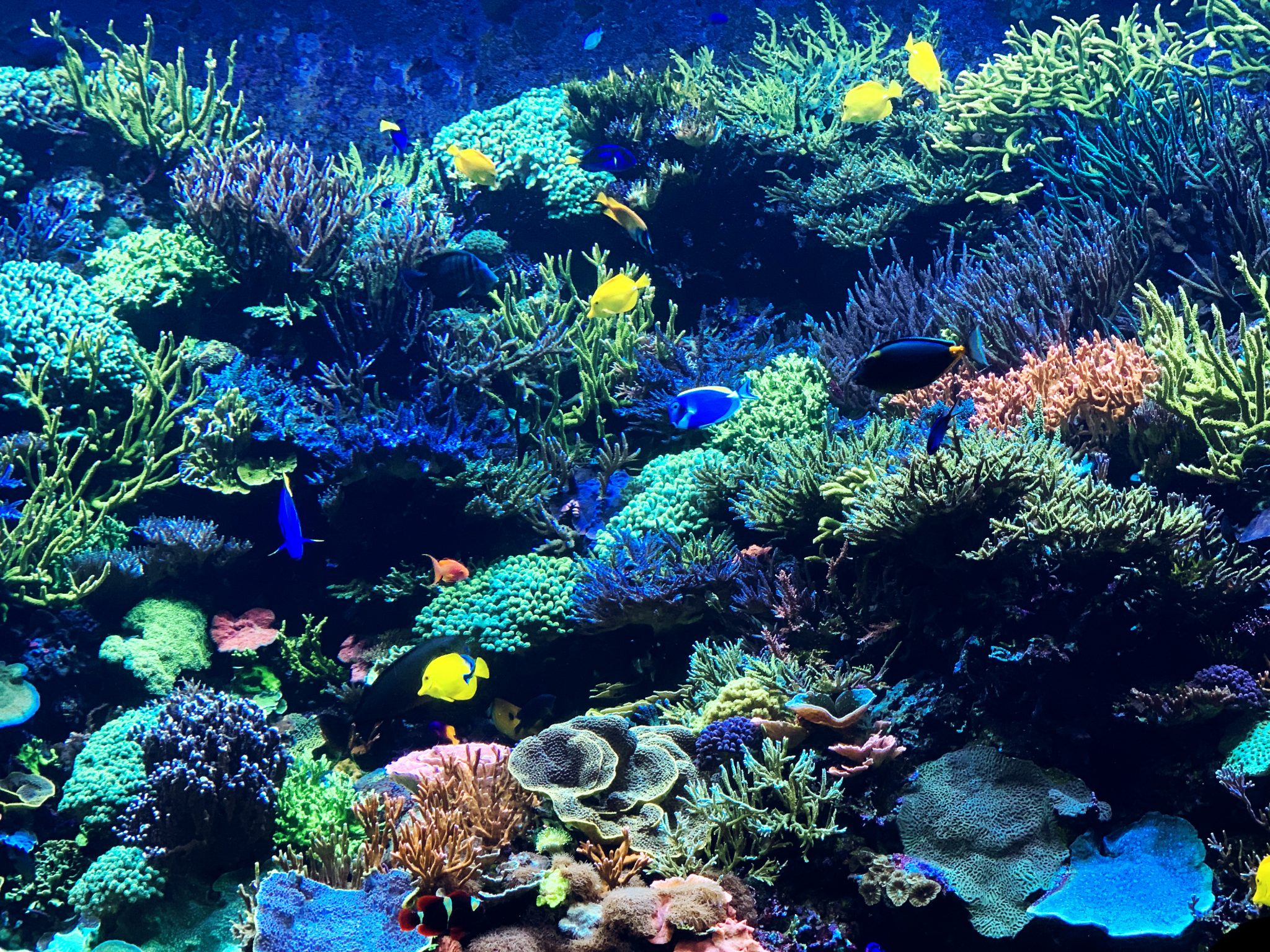
As the Summer sun brightens our skies and makes our hair glow, a sad bleaching is happening beneath the ocean’s surface. The Coral reefs are losing their vibrant color in a crisis known as Coral Bleaching. Sadly, this isn’t a mere loss of color. It’s a warning sign from the ocean, marking the beginning of one of nature’s most fragile symbiotic relationships.
What Makes A Coral Reef?
A coral reef begins with a single drifting larva settling onto stone. From that tiny speck grows a polyp, soft-bodied, delicate, and determined. Polyps build their homes from calcium carbonate, generation after generation, until entire underwater cities rise from the seafloor.
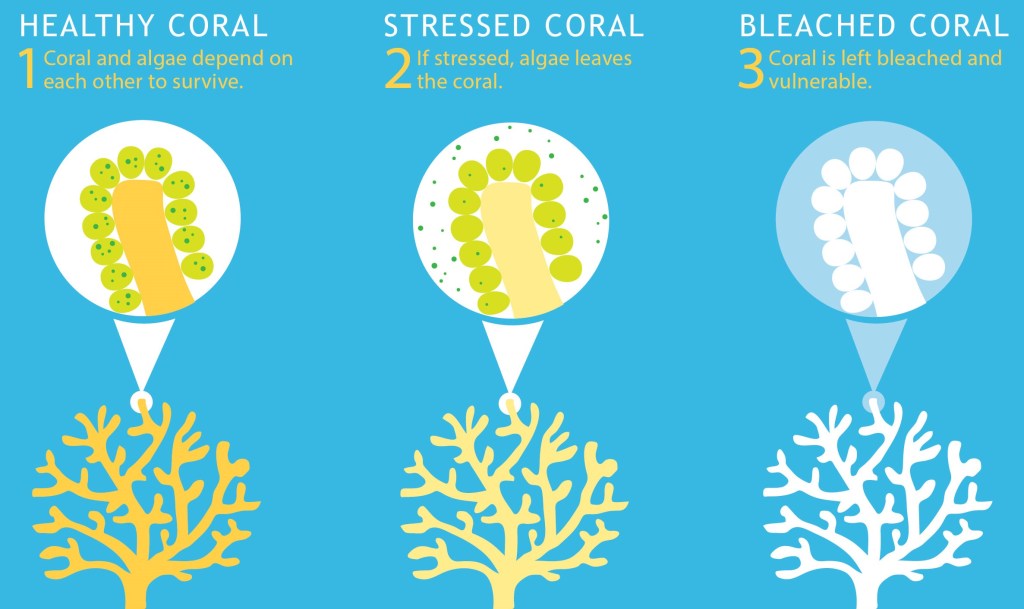
But coral cannot survive alone in the nutrient-poor waters where reefs flourish. Inside their tissues live microscopic algae called zooxanthellae, which perform photosynthesis and provide the coral with up to 90% of its energy. In return, the coral offers shelter and nutrients. The brilliant colors of a healthy reef come entirely from these algae. The coral itself is nearly transparent.
This partnership is ancient, elegant, and exquisitely fragile.
When The Heat Is Too Much
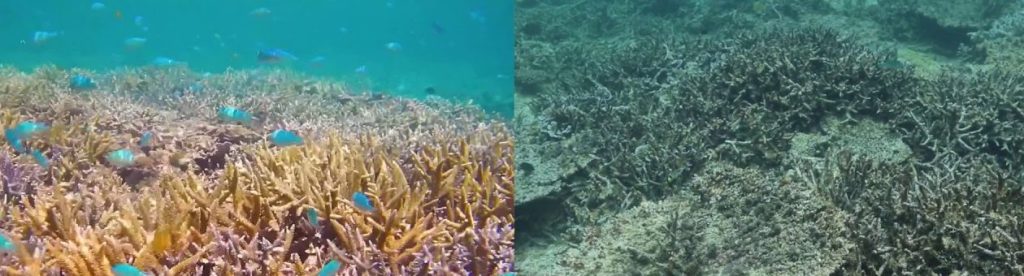
Corals live between the temperatures of 73 and 84 degrees Fahrenheit. Just a few degrees above this average for even a short time can be disastrous for the reefs. When ocean temperatures rise above normal, the coral will become stressed and start to shed their partner Zooxanthellae as an attempt to cool off and survive. Sadly, without their algae, the coral lose their primary and main sources of energy.
This reveals a ghostly pale skeleton beneath, leading to the phenomenon known as Coral Bleaching and while it isn’t an immediate death for them it will lead to it if they can’t cool off fast enough to regain their algae partner. Without the algae they have no photosynthetic parts which means they have no color and no food.
How Bad Is It?
The scale of what is happening to the world’s reefs right now is staggering. We are not talking about isolated patches of stressed coral. We are talking about a global emergency unfolding simultaneously across every major ocean basin on Earth.
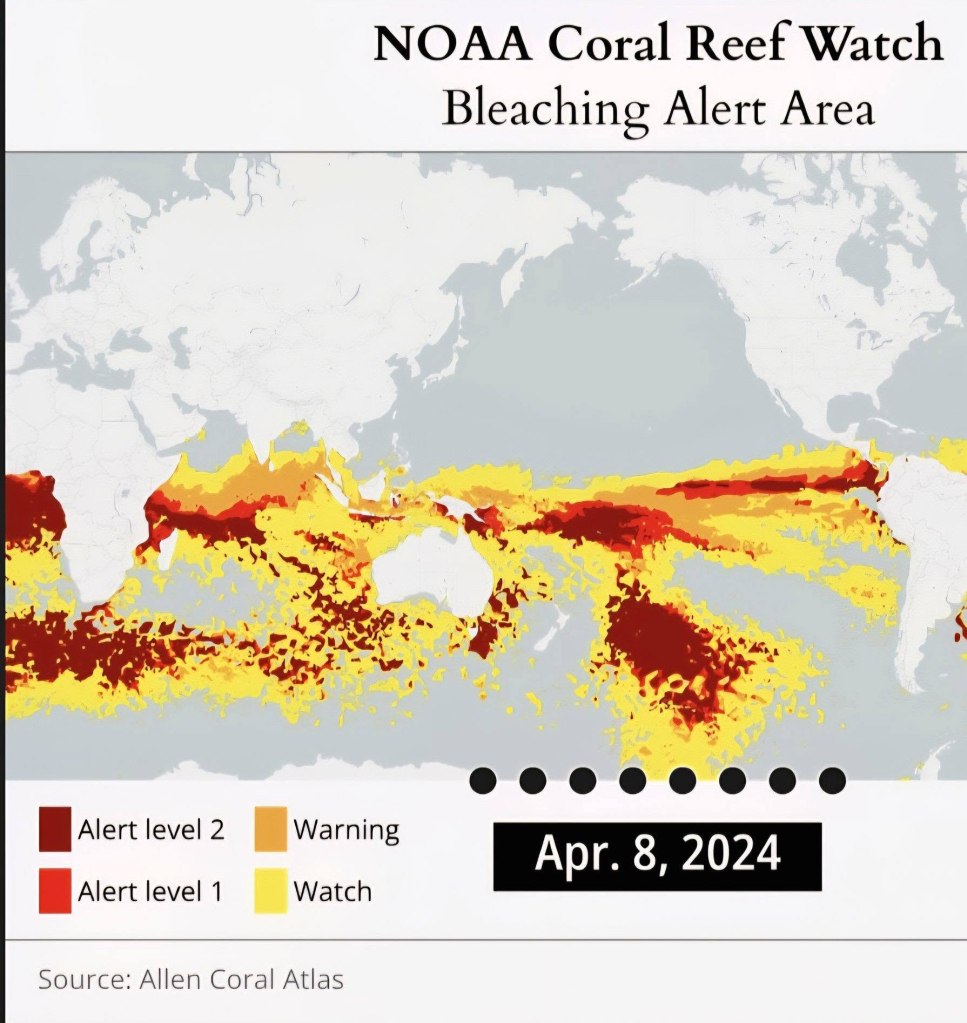
In April 2024, NOAA officially confirmed the fourth global coral bleaching event ever recorded, and the second in just a decade. Between early 2023 and mid-2024, bleaching-level heat stress was documented in at least 62 countries and territories across every major ocean basin. By April 2025, NOAA reported that 84.4% of the world’s reef area had experienced bleaching-level heat stress. This is not a regional anomaly. It is a planetary pattern.
Australia’s Great Barrier Reef tells this story painfully clearly. It has endured 7 mass bleaching events since 1998, with 6 of them occurring just since 2016. The 2024 event was the most spatially widespread ever recorded on the reef, reaching southern sections that had previously escaped the worst of the heat.
Across the Indian Ocean, including parts of the Chagos Archipelago, scientists reported severe to catastrophic losses, with some sites seeing 70 to 90% coral mortality in preliminary assessments.
What makes all of this so alarming is how quickly these events are arriving, one after another. In the 1980s, a major global bleaching event happened roughly once every 25 to 30 years, giving reefs time to recover between disasters. Today that window has collapsed to about every 6 years, and it is still shrinking. Reefs simply cannot recover fast enough before the next wave of heat arrives.
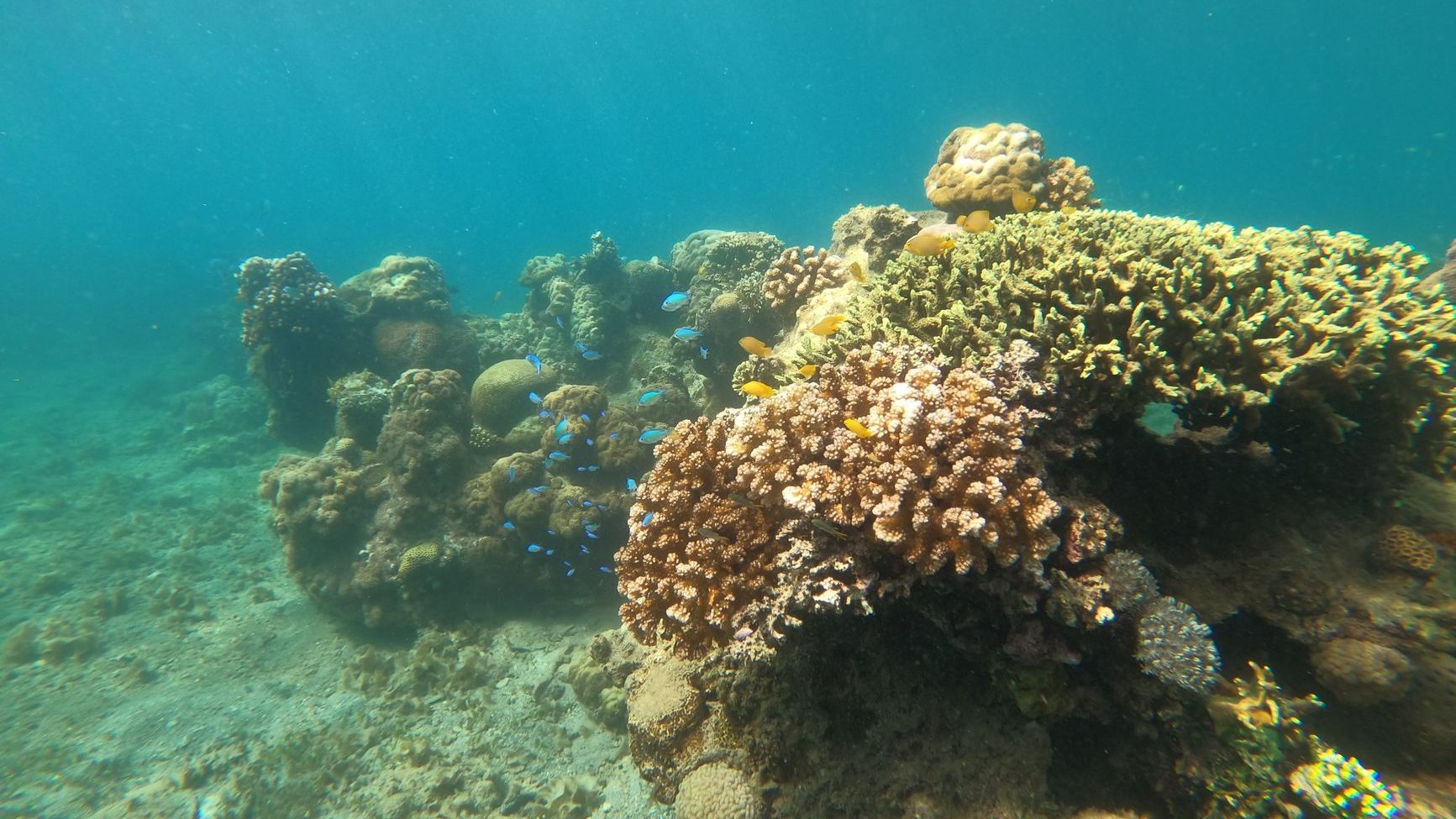
More Than Just Coral
It can be easy, especially for those of us who live far from the ocean, to think of bleaching as a distant underwater problem that doesn’t quite reach us. But coral reefs touch nearly every corner of life on this planet, including ours.
Coral reefs cover less than 1% of the ocean floor, yet they support approximately 25% of all known marine species. Scientists call them the rainforests of the sea, and the comparison earns its weight. When a reef bleaches and dies, those species don’t simply find somewhere else to go. The fish that spawn in reef crevices lose their nurseries. The invertebrates that filter the surrounding water lose their home. The predators that rely on those fish go hungry. The loss moves outward through the food web like a stone dropped in still water, and the ripples don’t stop at the shoreline.
Reefs support fisheries that feed over 500 million people, many of them in coastal communities with very few alternatives. They absorb up to 97% of incoming wave energy, acting as a natural buffer against storm surge, coastal erosion, and hurricane damage. Globally, the goods and services coral reefs provide are estimated at $2.7 trillion every single year. The fishing families, the dive operators, the coastal towns built around these ecosystems don’t have a backup plan, and neither does the ocean.
Why Is The Ocean Getting Warmer?
The short answer is that we have been warming the atmosphere for over a century, and the ocean has quietly been absorbing the consequences on our behalf.
For more than 100 years, human activity, primarily the burning of fossil fuels, has increased atmospheric carbon dioxide. The ocean has absorbed approximately 90% of the excess heat trapped by those rising emissions. That is an enormous gift the ocean has given us. Sadly, it is one the reef is paying the price for.
Climate change is the biggest driver of mass bleaching, but it is not the only pressure reefs face. Agricultural runoff, fertilizer pollution, sedimentation, and overfishing all weaken reefs and make them less able to withstand heat stress. The threats stack on top of each other, and the coral absorbs all of them.
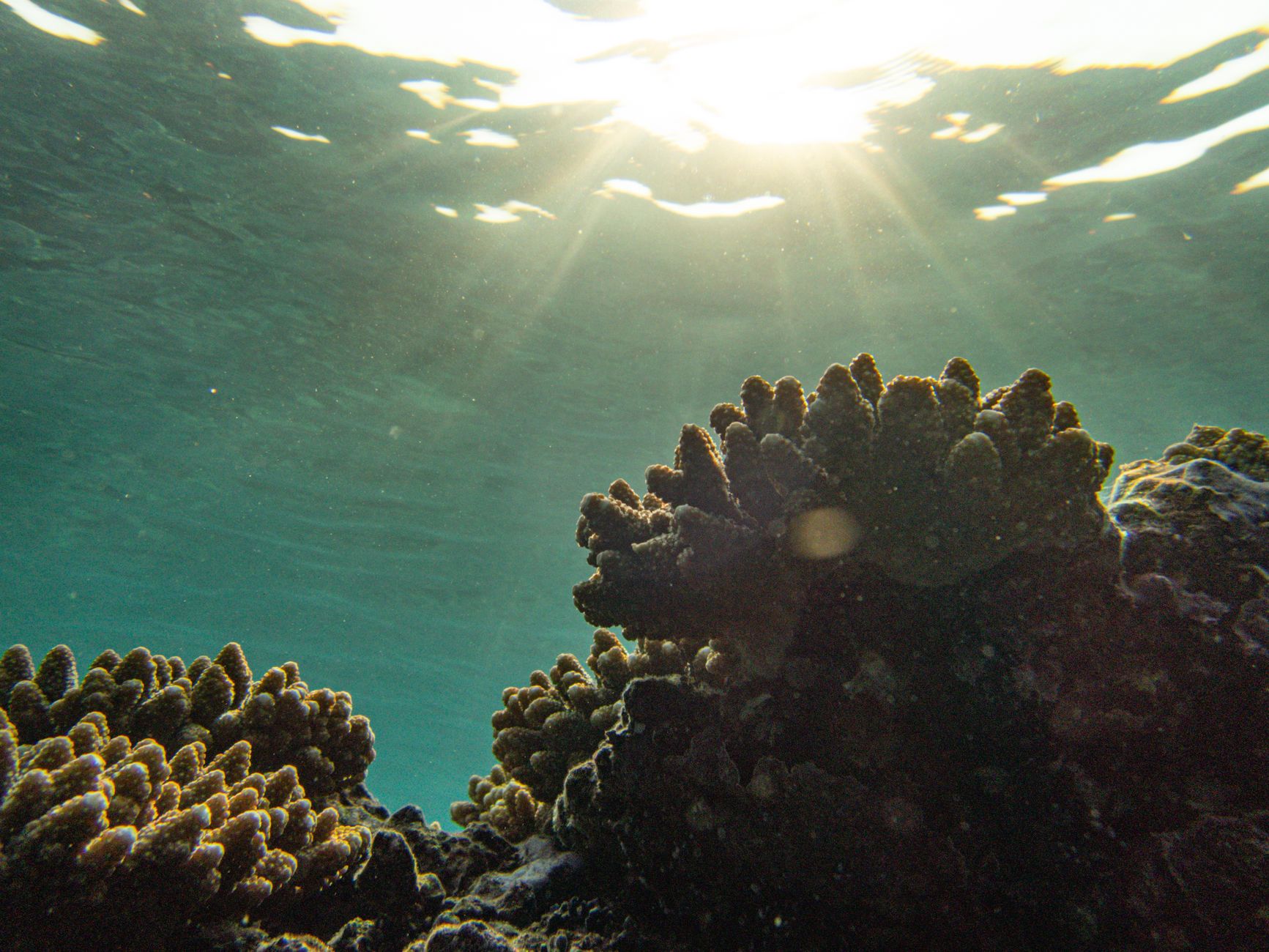
Can The Reef Come Back?
This is the question that matters most, and the honest answer is: yes, but only if we give it the chance to.
Bleached coral is not automatically dead coral. If temperatures fall in time, the zooxanthellae can return and the reef can slowly rebuild. Around the world, scientists are working hard to help make that happen. Coral nurseries grow fragments in controlled environments until they are strong enough to be transplanted back onto damaged reefs. Heat-tolerant strains are being identified and cultivated to build more resilient reef populations. Marine protected areas reduce local stressors, giving reefs a fighting chance against the global heat they are already facing. These efforts are not theoretical. They are active right now in the Florida Keys, the Great Barrier Reef, and across the Pacific.
What you can do right now:
- Choose reef-safe sunscreen near ocean waters. Look for mineral-based formulas without oxybenzone or octinoxate.
- Reduce your carbon footprint in whatever way is realistic for your life. Every fraction of a degree matters.
- Support organizations like NOAA Coral Reef Watch, the Coral Restoration Foundation, and regional restoration programs.
- Contact your representatives and let them know ocean health is a priority. Policy is the lever that moves everything else.
The Reef Is Still Here
There is a particular quality to summer sunlight on open water. It comes down hard and bright and seems to promise that everything beneath the surface is as vivid and alive as it has always been.
Sadly, the coral reef knows better. It has been holding the ocean’s heat for us for decades now, turning pale in the stretches of sea where the water climbs past what it can bear, waiting for a reprieve that comes less reliably every year. And yet it persists. Scientists tend nurseries in the same warming water that threatens the coral they are growing. Communities fight for protections that may come too late, and they fight anyway.
The reef is not gone. Not yet. What happens next depends on choices being made right now, in legislatures and grocery aisles and voting booths and backyards. The bleaching is a message written in white across the ocean floor. The only question left is whether we read it in time.
Sources
Australian Institute of Marine Science. Annual Summary Report of Coral Reef Condition 2024–25. AIMS, 2024, https://www.aims.gov.au/monitoring-great-barrier-reef/gbr-condition-summary-2024-25.
Coral Vita. “Coral Bleaching: Causes, Impacts & Global Solutions.” Coral Vita, 2025, https://coralvita.co/coral-cafe/coral-bleaching/.
Great Barrier Reef Foundation. “Coral Bleaching: What It Means for the Reef.” Great Barrier Reef Foundation, 2026, https://www.barrierreef.org/the-reef/threats/coral-bleaching.
International Coral Reef Initiative. The Fourth Global Bleaching Event. ICRI, 2024, https://icriforum.org/4gbe/.
MarAlliance. “Coral Reefs.” MarAlliance, https://maralliance.org/coral-reefs/.
NASA. “What Is a Coral Reef?” NASA, 2024, https://www.nasa.gov/general/what-is-a-coral-reef/.
NOAA Coral Reef Watch. “NOAA Confirms 4th Global Coral Bleaching Event.” NOAA, 2024, https://www.noaa.gov/news-release/noaa-confirms-4th-global-coral-bleaching-event.
NOAA National Ocean Service. “How Does Climate Change Affect Coral Reefs?” NOAA, https://oceanservice.noaa.gov/facts/coralreef-climate.html.
United Nations. “How Is Climate Change Impacting the World’s Ocean?” United Nations, https://www.un.org/en/climatechange/science/climate-issues/ocean-impacts.
United Nations Environment Programme. “Coral Reefs.” UNEP, https://www.unep.org/topics/ocean-seas-and-coasts/blue-ecosystems/coral-reefs.


You must be logged in to post a comment.