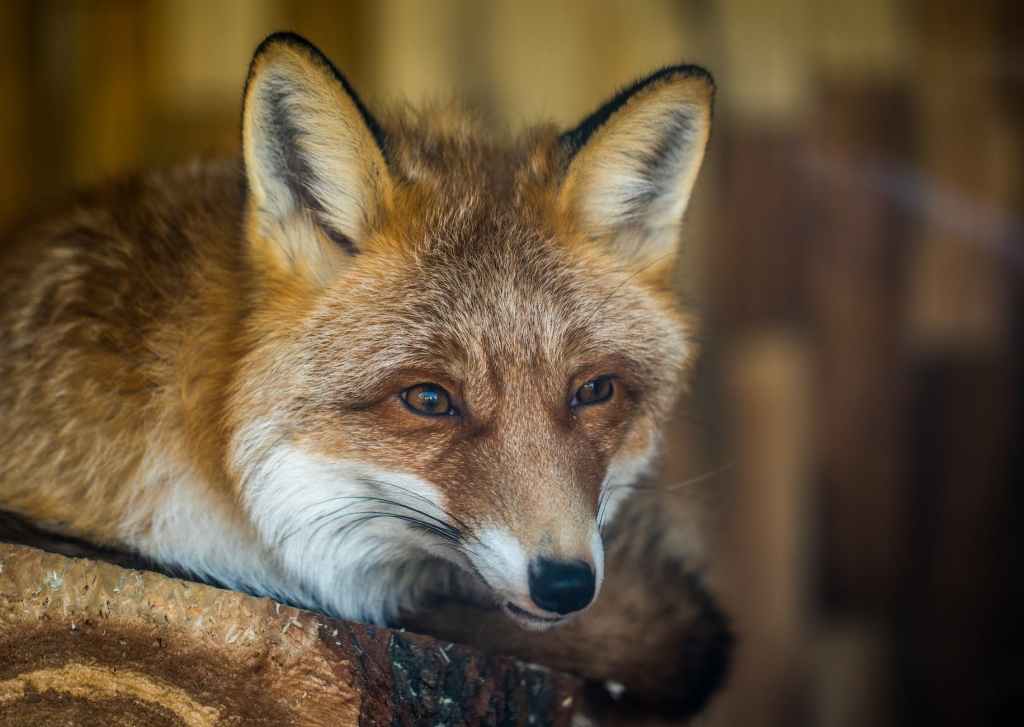
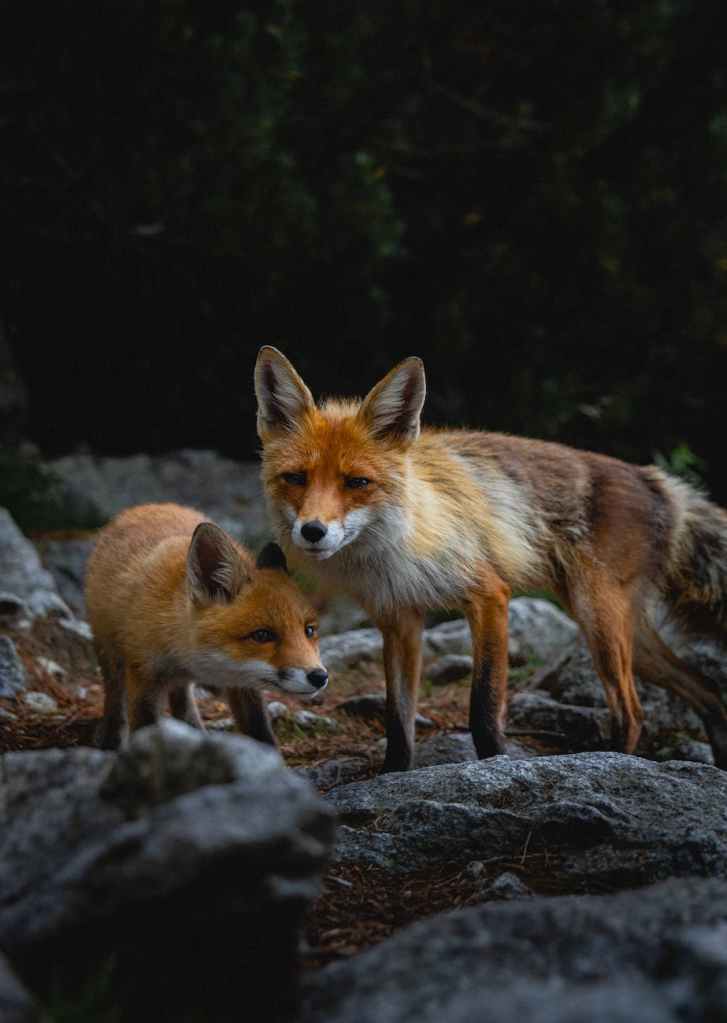
In the heart of California’s Sierra Nevada mountain range lies a secret, a hidden world of resilience… the home of the Sierra Nevada Red Fox. Amidst a fragile ecosystem teetering on the edge of balance, these elusive creatures, with fewer than 50 remaining, stand as North America’s rarest mammals. Yet, in the face of adversity, they possess a wild survival strategy that sets them apart. (This article has been updated as of 2026.)
Some animals fight extinction with tooth and claw. The Sierra Nevada red fox is fighting it with its own DNA, and that fight is costing it everything it is. This is the story of a fox dissolving into existence.
Born of Ice
The ancestors of the Sierra Nevada red fox crossed the Bering Land Bridge from Asia over 200,000 years ago, long before the most recent glacial period reshaped the continent beneath them. When the ice finally retreated, these foxes were left behind in the cold, high alpine zones of the western mountains. They stayed. Over thousands of years, cut off from every other red fox population on earth, they became something genetically distinct.
The mountain shaped them precisely. They are slightly smaller than lowland red foxes, with a lighter build and paws suited for travel over deep snow. Their fur comes in three genetically determined color phases (red, cross-patterned, and silver-black), with the red phase carrying a greyish-blonde tone characteristic of high-altitude foxes. It is a genetic polymorphism, the kind that tends to persist when different colorations confer different advantages depending on habitat and light conditions. These are not incidental differences. They are the result of thousands of years spent surviving conditions that most foxes never face.
California declared them threatened in 1980, and they are now federally endangered. The Sierra Nevada population holds somewhere between 18 and 39 individuals total, with the Lassen population estimated at fewer than 10 breeding adults. Two populations. A few dozen animals. What is left of a lineage that survived the Pleistocene, the last great ice age, is now small enough to count by hand.
The Wound That Wouldn’t Close
For decades, biologists assumed the population stayed small because of what humans had done to it. They were right, but only partway.
Between 1940 and 1959, trappers took 135 pelts in total across the entire subspecies range. By the 1960s, that number had already fallen to roughly two animals a year due to the size of the population being so small. California banned Sierra Nevada Red Fox trapping in 1974, driven by the decline of this population. The killing stopped, thankfully, but the foxes did not come back. For decades, scientists assumed the population would eventually stabilize on its own. It did not. They spent years wondering why a population freed from its primary threat refused to recover.
A 2024 genomic study out of UC Davis finally named it: inbreeding depression. The researchers sequenced 28 whole genomes from the four recognized subspecies of montane red fox, including the Lassen population, and found high levels of recent inbreeding and an accumulation of deleterious mutations that had not been eliminated.
Sadly, when a population shrinks past a certain point, individuals have no choice but to mate with close relatives. Harmful mutations that were once rare begin rising in frequency, including reduced reproductive quality, heart defects, and abnormal skeletal deformities. They accumulate quietly across generations, dragging down reproductive success long after the original threat has passed. The ban had removed the pressure, but the genetic damage it left behind was already too compounded inside every surviving animal. The trap was lifted. The wound it left kept bleeding.
What the genomes revealed was startling. The montane red foxes around Lassen were once part of a much larger, genetically diverse population ranging largely uninterrupted throughout the western states. Centuries of human pressure had turned a connected, resilient subspecies into scattered pockets of animals breeding toward genetic collapse, not because they were doing anything wrong, but because we had left them with no other choice.
Strangers at the Ridge
Twelve years before that study, two males arrived and had traveled from a Great Basin red fox population in central Nevada, more than 200 kilometers away. Nobody knows what drove them that far. The nearest documented population of their kind was across mountains and desert, and somehow they crossed it. They were genetically unrelated to the Lassen foxes and carried DNA shaped by an entirely different landscape. In the breeding season that followed, litters appeared for the first time in years. Researchers documented roughly one litter per year over the five years following the immigrants’ arrival, with most litters containing one to three pups. All offspring were descended directly or indirectly from matings involving those two males.
A population on the edge of silence began, improbably, to breathe again. Not through a government program. Not through scientific intervention. Through two foxes who walked in from the desert and changed everything.
The Cruelest Paradox
Here is where the story becomes more complicated.
Hybridization is simultaneously the thing keeping the Sierra Nevada red fox alive and the thing most likely to end it. Both are true. At the same time.
There is genuine scientific concern that too much inbreeding among pure Sierra Nevada red foxes could cause more damage than some level of hybridization. Breeding with nonnative foxes, to a certain point, may actually help preserve the subspecies’ DNA and improve its chances of survival. The Great Basin immigrants proved that. Without them, there may be no foxes left to argue about.
But the margin is razor-thin. Nonnative genes introduced through hybridization can interfere with the adaptive native genes the Sierra Nevada red fox built across thousands of years of mountain survival, the very genes that make it what it is. Push hybridization too far, and it tips into genetic swamping. Continued interbreeding with nonnatives, particularly alongside low reproductive success among native pairs, can cause the complete replacement of native genes and transform the population from Sierra Nevada red fox into something else entirely.
The nonnative lowland red foxes now present in California were introduced from the Midwest in the late 1800s for fur farming. They do not carry the specialized adaptations the Sierra Nevada red fox has developed, and those adaptations grow weaker with each generation of hybrid offspring. Every degree of hybridization is a degree of erosion. Thousands of years of mountain-built survival traits, quietly unmade.
The U.S. Fish and Wildlife Service has identified over-hybridization as one of the greatest threats to this population’s continued existence. The fox is surviving. It may be surviving itself into extinction.
What Comes Next
For most endangered species, conservation means managing the landscape. For the Sierra Nevada red fox, it means managing a genetic landscape, threading a needle between too much inbreeding and too much hybridization, trying to hold a subspecies together that humans spent a century pulling apart.
Scientists are now exploring genetic rescue, deliberately introducing animals from related populations to counteract inbreeding depression, the same strategy that pulled the Florida panther back from the edge in the 1990s. But researchers caution that true rescue requires reconnecting the whole subspecies, not just shoring up one isolated population.
Other paths forward include limiting habitat fragmentation from development, building wildlife crossings, and reintroducing foxes to increase connectivity across their historical range.
None of this is guaranteed. None of it is simple. But these foxes have been navigating impossible conditions for 200,000 years. They are still here, still moving across ridgelines that have outlasted everything we have built. The question is whether we will finally choose to be worthy of sharing a planet with them, or whether we will watch the last of them disappear into a genome that no longer remembers what it was.
References:
1. “The Sierra Nevada red fox is now protected and listed as an endangered species.” CNN.
2. “Sierra Nevada Red Fox.” U.S Fish & Wildlife Service.
3. “Sierra Nevada Red Fox.” Center for Biological Diversity.
4. “Sierra Nevada Red Fox.” California Department of Fish & Wildlife.
5. “Sierra Nevada Red Fox: Current Status and Future Prospects.” The Wildlife Society.
6. “Population Structure and Genetic Diversity of Sierra Nevada Red Foxes.” Conservation Genetics.
7. UC Davis — A Tale of Two Foxes: The Genetic Story of the Sierra Nevada Red Fox
8. Federal Register — Endangered Species Status for the Sierra Nevada Red Fox (2021)
9. ScienceDaily — Genetic Rescue for Rare Red Foxes? (2024)
10. Oregon State University — Oregon State Study Provides Foundation for Protecting Rare Fox


You must be logged in to post a comment.