
In a world where plants absorb sunlight and rain, the Venus flytrap defies expectations, acting like a tiny predator lying in the wait. With a snap, it turns from passive plant to ruthless ravager, luring in and devouring its unsuspecting prey. Picture this: A tiny insect, landing on a plant, unaware of the danger that is about to FOLD upon it. In less than a second, the plant’s “jaws” snap shut, trapping the insect inside until it can digest it. This sounds like something out of science fiction, but this thriller occurs daily in the lives of Venus flytraps.

This bizarre plant blends the characteristics of both plant and predator, captivating anyone lucky enough to see it in action. In fact, here’s a GIF:
A Bite of History: Discovering the Venus Flytrap
The Venus Flytrap was first described in 1759 by North Carolina’s colonial governor, Arthur Dobbs, who marveled at its ability to catch prey, and he likened it to a “sensitive steel trap.” Later, Charles Darwin called it “one of the most wonderful plants in the world” and dedicated an entire chapter to it in his book Insectivorous Plants. These early observations grounded the plants reputation as a botanical wonder. The plant’s allure extends beyond fact and has inspired fictional carnivorous plants like Audrey II in Little Shop of Horrors.
But what exactly are Venus Flytraps?
The Venus Flytrap is a carnivorous plant native to the subtropical wetlands of North and South Carolina. It is in these nutrient poor, acidic soils where other plants struggle to survive, that the Venus Flytrap thrives. Rather than relying purely on photosynthesis, it has evolved to capture and digest insects.
Beyond its iconic traps, these plants produce a cute flowering structure for pollination. A long, slender stalk pops up far above the traps, topped with small, white, flowers with five petals each. These flowers bloom late spring/ early summer and are carefully positioned far away from the traps so that the attracted pollinators can make the swap without risking them being eaten.
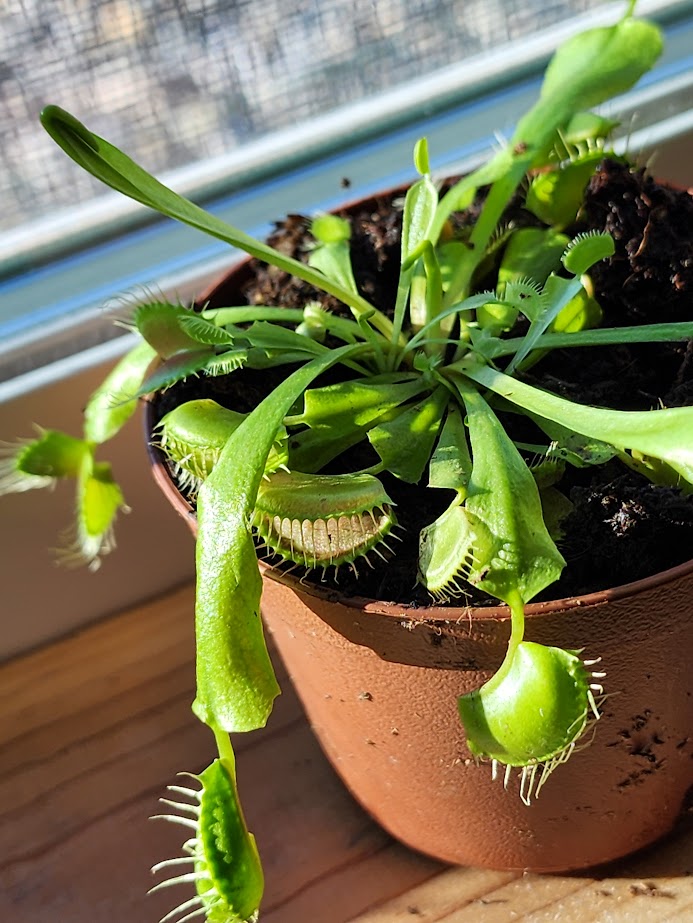

Anatomy of a Green Predator
These traps, AKA “jaws”, are modified leaves lined with tiny, hair liked sensors called trigger hairs. These sensors are so incredibly precise and exact that the trap only triggers if an insect touches one hair twice, or two hairs within twenty seconds. This maneuver prevents the trap from closing on false alarms like rain drops or debris.
Once the trap closes, it transforms into a sealed digestive chamber, where the Venus Flytrap begins releasing digestive enzymes that slowly break down the insect. This process can take a long time, but around five days. During this period the trap remains shut and once it is fully digested the trap reopens.
Adaptable Appetite
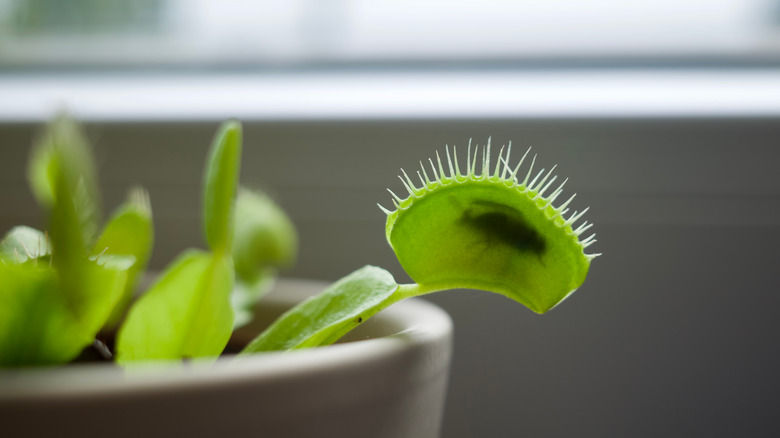
The Venus Flytraps ability to capture and eat some insects is the plant’s genius way of obtaining essential nutrients like nitrogen and phosphorus that are scarce in its native soil. While rare, the Venus Flytrap has been known to catch spiders or even small frogs. Nevertheless, capturing prey that exceeds the traps digestive capabilities often leads to the trap’s untimely death. Despite this adaptation, the Venus Flytrap relies heavily on photosynthesis, using sunlight to produce the bulk of its energy.
Caring for Venus Flytraps
Venus Flytraps are a favorite among plant enthusiasts, but owning one comes with a responsibility to support conservation. To guarantee their survival in the wild, it’s crucial to only buy these plants from ethical nurseries that cultivate these plants sustainably.
Here’s a few tips to help you keep them healthy and thriving if you have one:
- Soil: Use soils like sphagnum moss or a mix of sand and peat. Standard potting soil contains nutrients that Venus Flytraps can’t handle.
- Water: Only use distilled or rainwater as tap water also contains minerals that can damage the plant. Keep the soil consistently moist, mimicking the humid conditions of the wetlands.
- Light: Provide bright sunlight for about six hours a day.
- Feeding: Feed them sparingly when it comes to live insects. Never use human food as it can rot and harm the plant. Each trap can only open and close a few times before they die and are replaced by a new trap from the plant.
Why The Venus Flytrap Needs Protection
Venus Flytraps play a role in the bogs and wetlands they inhabit. By preying on insects, they help regulate insect populations and prevent certain insects from becoming overpopulated. However, human activities like poaching, wetland destruction, and climate change have reduced the numbers of these plants in the wild. Currently, they are a species of concern, listed as vulnerable, and harming or poaching them can result in criminal charges. The collection of them, often driven by their popularity as exotic houseplants, has been the biggest reason for decline.
Conservationists are using initiatives aimed at safeguarding both the plants and their ecosystems. Protected areas like the North Carolina’s Green Swamp Preserve, offer habitats for the Venus Flytrap, shielding them from illegal collection and habitat loss. Cultivation programs ran by nurseries have been a huge help in the conservation efforts for ethically growing Venus Flytraps. This also ensure others can own them without poaching them from the wild.
Individuals, like you, can also play a role in protecting these marvelous plants. Supporting organizations like The Nature Conservancy and the U.S. Fish and Wildlife Service can make a significant impact, as these groups work to restore wetlands and create protective legislation. Donate to these causes, volunteer for local restoration projects, or simply spread awareness about the importance of these plants and their ecosystem. You can even engage in using platforms like “iNaturalist” and monitor plant populations over time.

 The Red Fox Gazette
You must be logged in to post a comment.