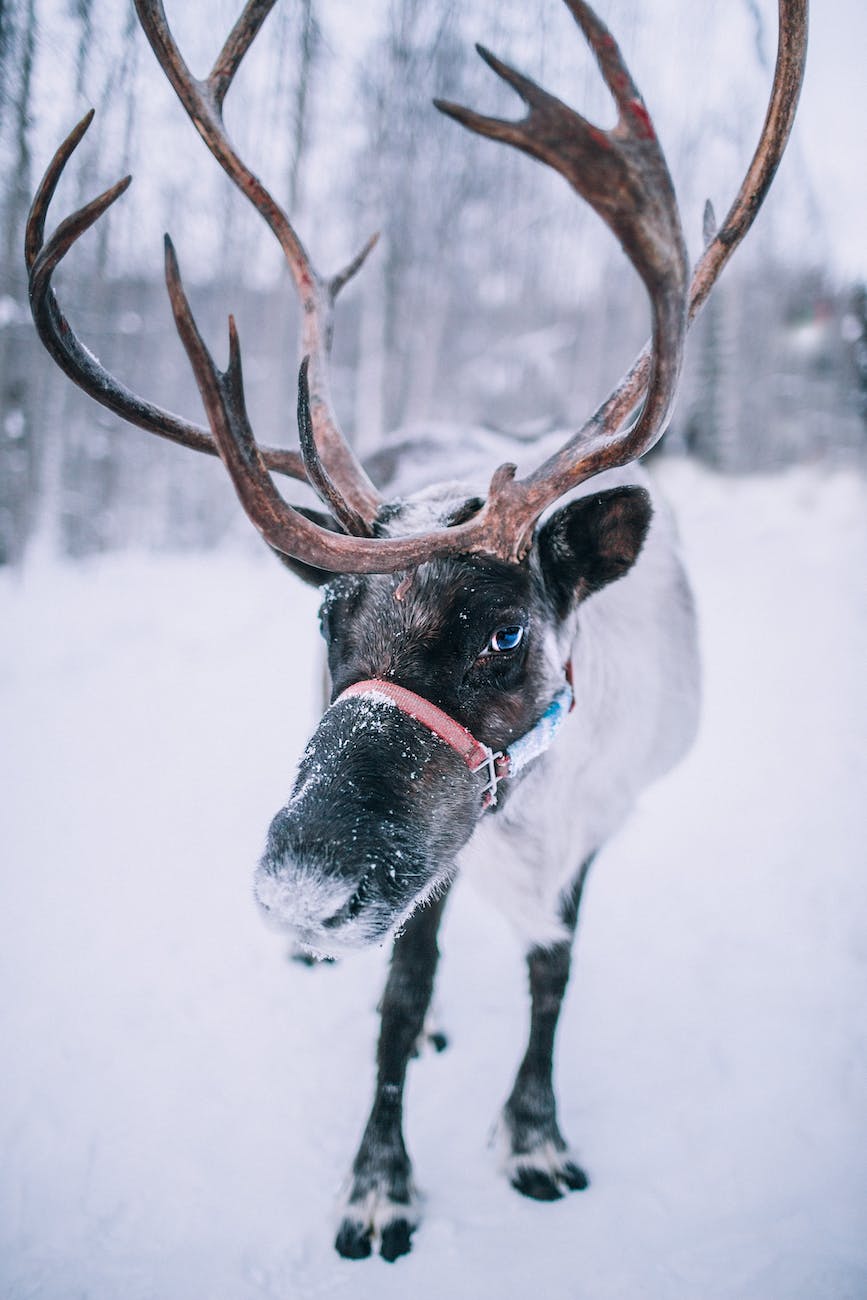
In the snowy realm of the North Pole, where snowflakes paint the landscape a blinding white, a group of extraordinary mythical beings rule this frost-kissed wilderness, Santa’s reindeer. However, beyond their renowned roles of pulling Santa’s sleigh every Christmas Eve, these creatures hold a deeper responsibility as a keystone species in other parts of the frozen expanse as they do not naturally live in the North Pole at all, making Santa’s reindeer truly magical!
They are considered keystone species, which means their activities greatly impact the structure and function of their environment. Reindeer help keep the balance of their ecosystems by grazing on vegetation like lichen, mosses, and grasses. This grazing activity influences the distribution and abundance of these plant species, which in turn affects other organisms in the ecosystem. Their migration patterns also contribute to nutrient cycling across vast landscapes. The loss of reindeer from these ecosystems could lead to significant changes, including shifts in plant communities and impacts on other wildlife species. Therefore, the conservation of reindeer populations is not just about preserving a single species but also about maintaining the health and balance of entire Arctic and subarctic ecosystems.
Reindeer are found in cold, snowy habitats, though. Places such as Greenland, Russia, Canada, and even Alaska. Oddly enough, the reindeer in North America are called “Caribou” unless domesticated, and then they get the special name of “Reindeer.” They happen to also be the only deer species in which both males and females grow antlers, as the females even keep their antlers throughout the winter, unlike the males, which helps them defend their food and their calves.
They are also unique in many other ways. For instance, they have a special nasal structure that helps them breathe in frigid air and warm it up before it reaches their lungs, along with a special digestive system that allows them to extract nutrients from various plants. They have more amazing adaptations that help them survive and travel across vast distances, such as their hooves, which act like snow boots. They allow the reindeer to walk on the snow without sinking and to grip the smooth, slippery ice. The hooves are not permanently the same either but change with the seasons. They become softer in the summer, giving the reindeer more traction on the tundra. These and other characteristics make reindeer fascinating creatures to study and conserve, as they show how resilient life can be under extreme challenges.
However, the reindeer are in trouble! Climate change, habitat loss, and human activities such as mining, oil drilling, and deforestation have put these amazing reindeer on the “vulnerable” list faster than the Circle of Life intended. Over the past 25 years, the population has declined by more than 50 percent. Climate change has even taken their main food source in the winter by freezing the lichen and making the reindeer unable to retrieve it. In the spring of 2021, 70,000 reindeer died of starvation due to the “rain-on-snow” phenomenon.
To help save the reindeer and Santa’s future travels, we can take several steps. By reducing our carbon footprint, we can help slow down the rate of climate change and protect the habitats of these creatures. You can reduce your carbon footprint by simply buying a reusable water bottle instead of plastic ones, as well as getting rid of phantom power. Did you know that your devices still use electricity even when they are powered off but still plugged in? This trick will not only help the planet but also your wallet! By avoiding products that contribute to deforestation as well, such as going paperless, you can help protect the habitats of these animals and more while being easier on your finances.
Reindeer are fascinating creatures with so much more to offer than just pulling a sleigh once a year. I hope this holiday season you take a moment to appreciate the magic of these extraordinary creatures. As you celebrate the joy of the season, remember the reindeer, not just as Santa’s loyal companions but as symbols of adaptability and survival in the face of adversity. Let their story inspire us to be more conscious of our actions and their impact on the environment.
In the spirit of giving, let us give back to our planet and its incredible wildlife this year and next. Let us strive to make choices that protect and preserve, ensuring that future generations can experience the wonder of a white Christmas with all of Santa’s reindeer leading the way.

 The Red Fox Gazette
You must be logged in to post a comment.